CPall SD Report 2019

Editorial Design, Information Design
About the project

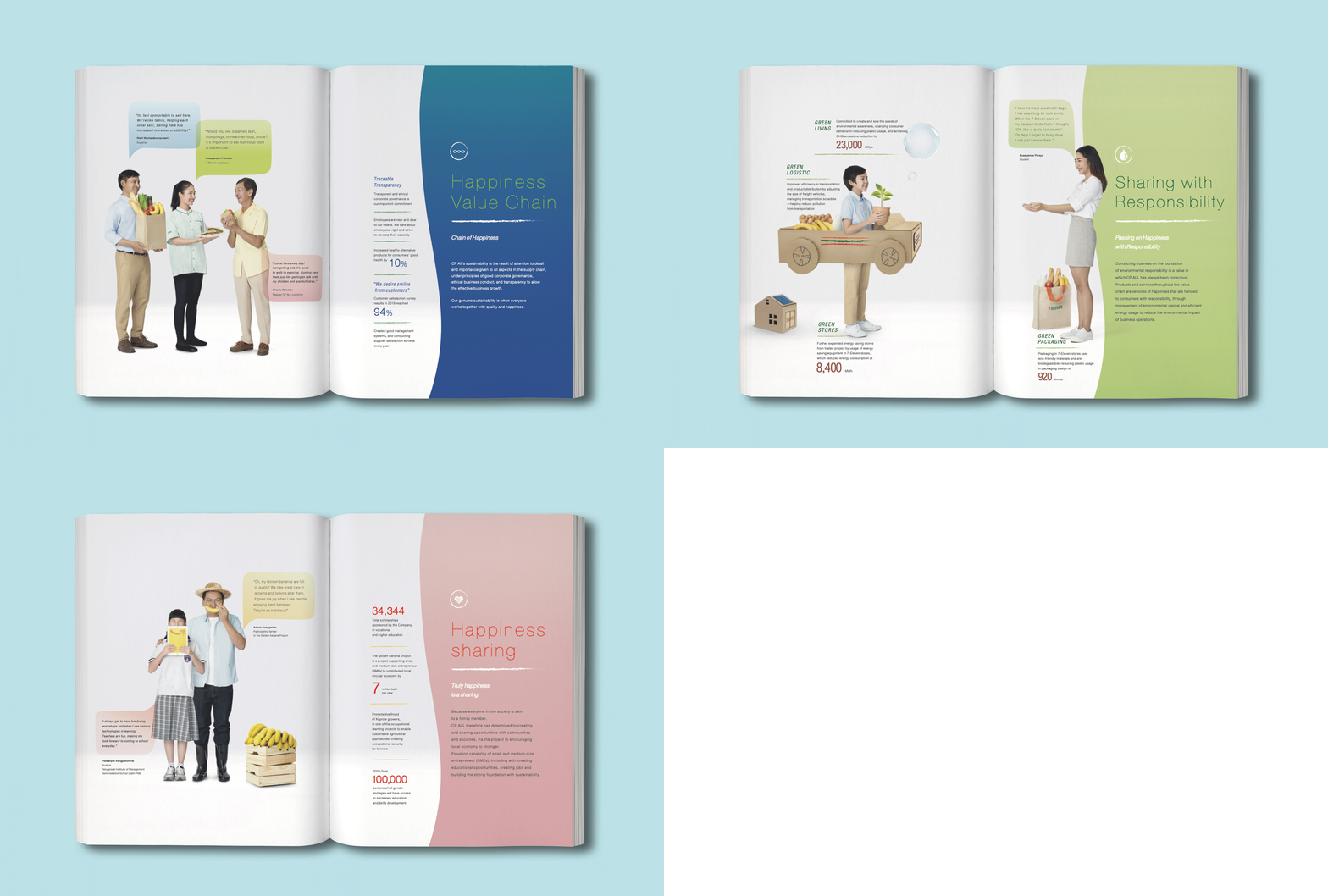
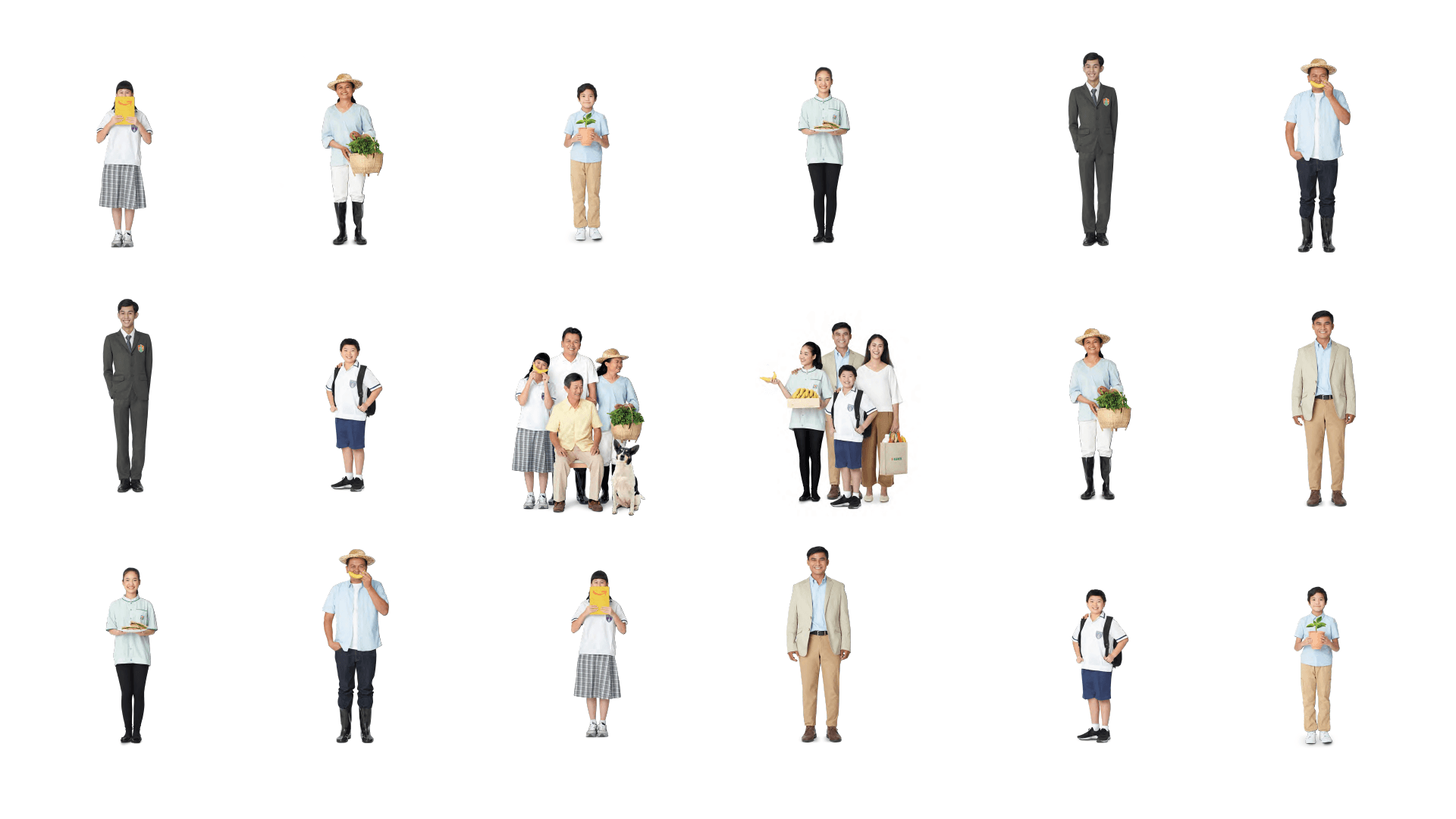
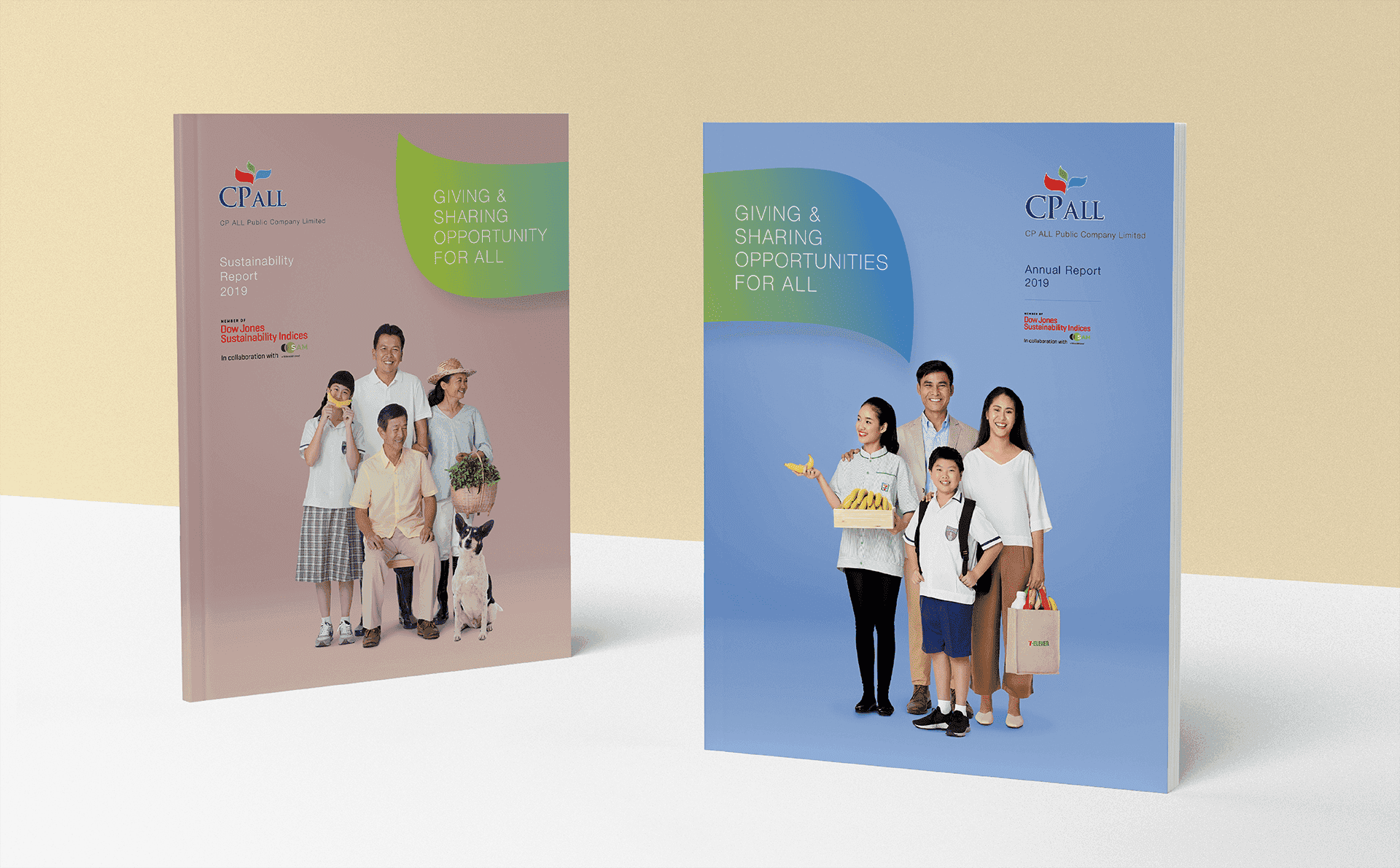
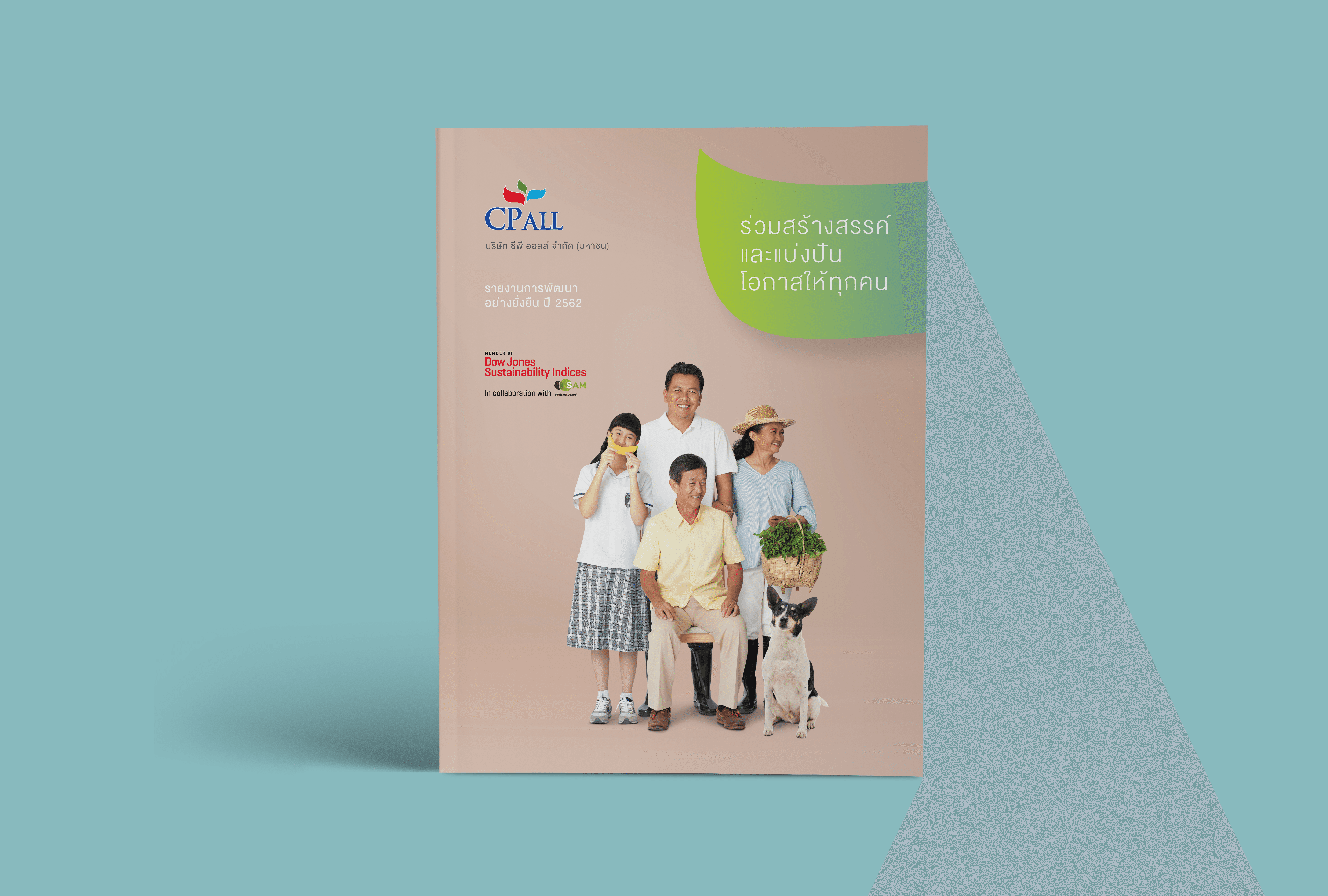
CP ALL’s 2019 Sustainability Development Report was developed around the concept of Family of Giving and Sharing, reflecting the close relationship between the company, communities, and stakeholders across Thailand. While the overarching concept was established at the agency level,

my role focused on editorial design, information architecture, and infographic development throughout the publication. The challenge was not only the scale of the report itself, but also the vast amount of sustainability data, corporate disclosures, and performance metrics that needed to be communicated clearly to a broad audience.

CP ALL’s 2019 Sustainability Development Report was developed around the concept of Family of Giving and Sharing, reflecting the close relationship between the company, communities, and stakeholders across Thailand. While the overarching concept was established at the agency level,

my role focused on editorial design, information architecture, and infographic development throughout the publication. The challenge was not only the scale of the report itself, but also the vast amount of sustainability data, corporate disclosures, and performance metrics that needed to be communicated clearly to a broad audience.

Client

CP ALL Public Company Limited

Services

Editorial Design, Information Design

Year

2020

Agency

Color Party Object Company
Creating a Structured Reading Experience

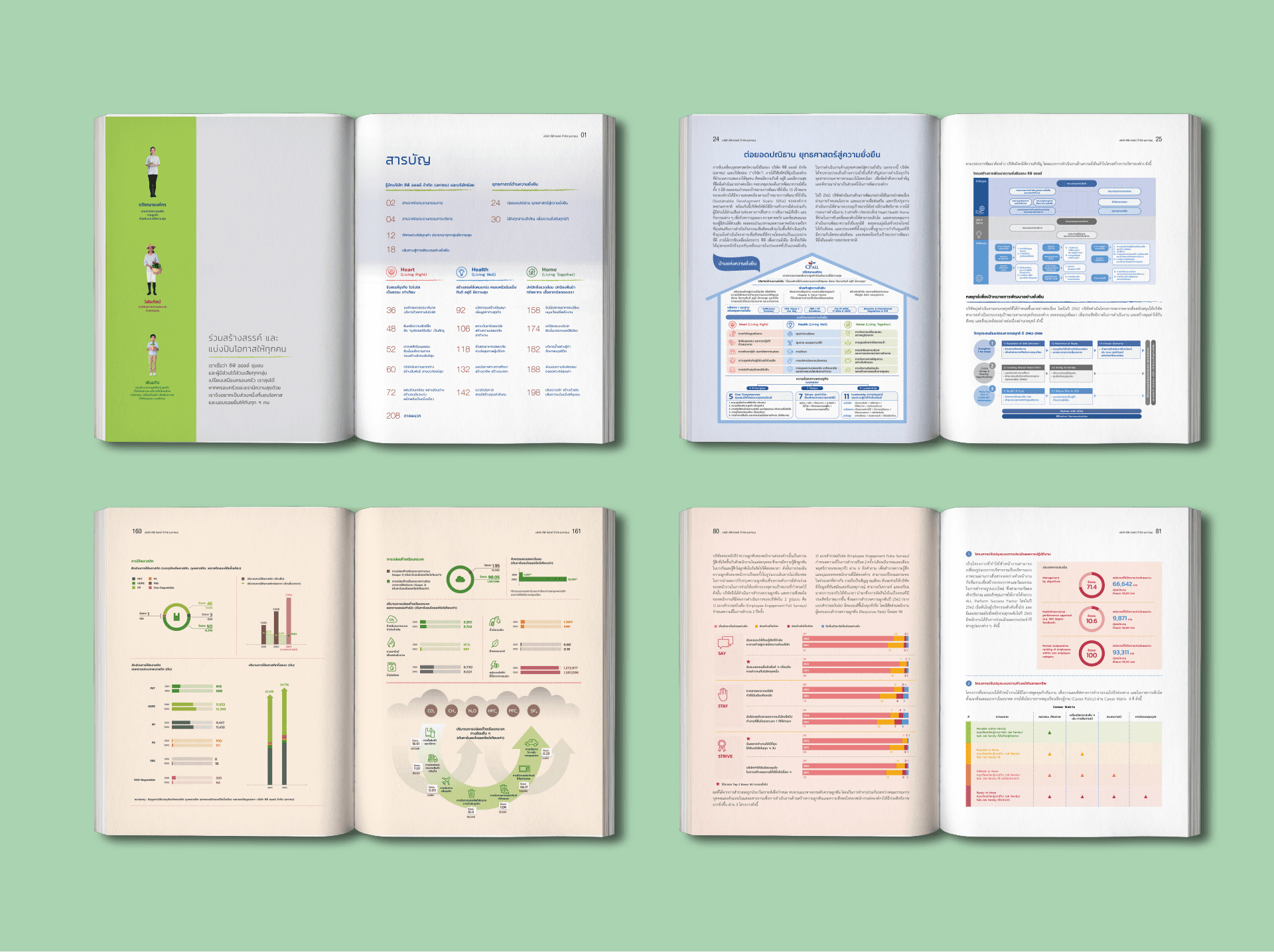
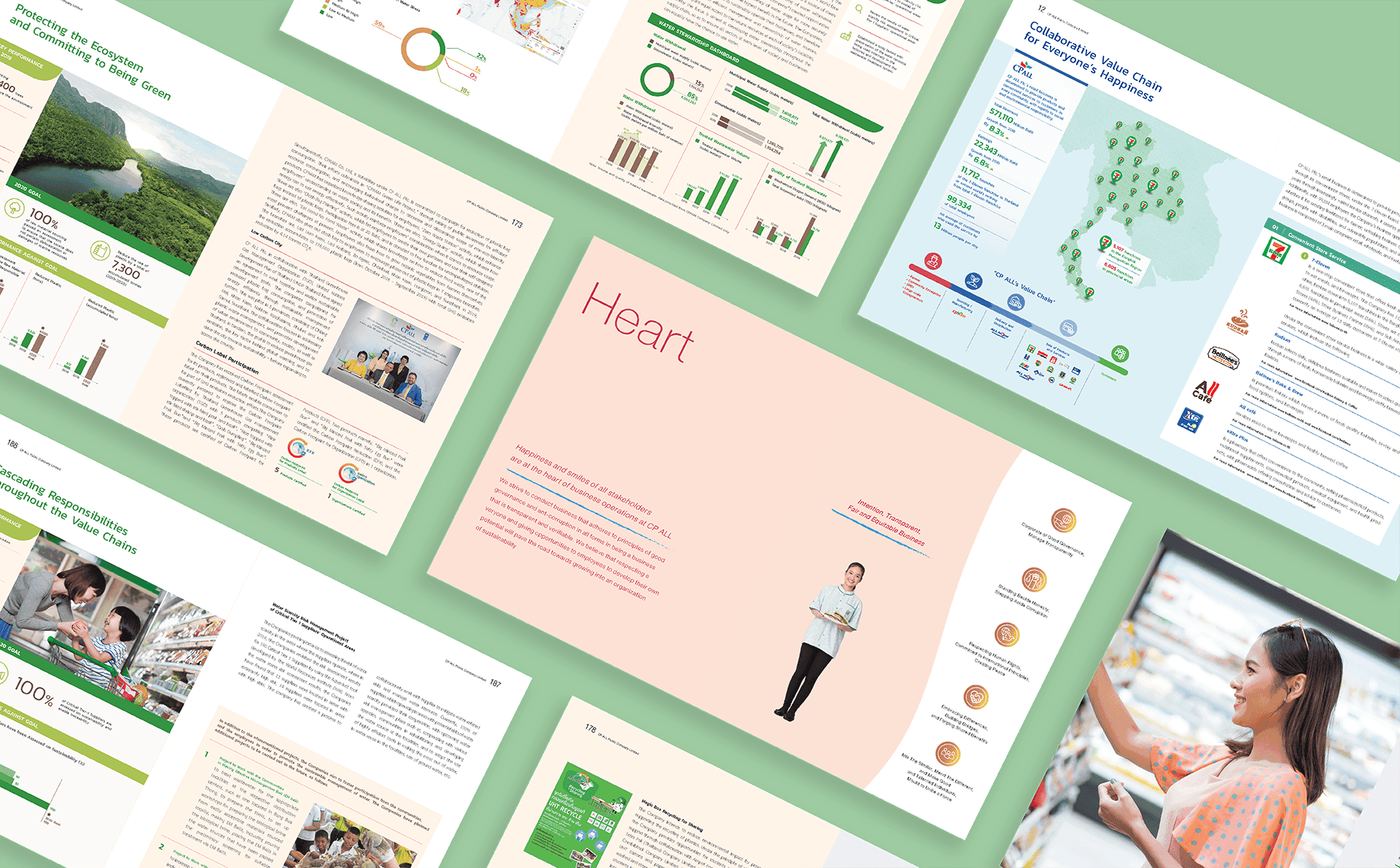
To improve navigation across the extensive content, the report was organized into three key pillars: Home (Governance), Health (Social), and Heart (Sustainability). Rather than treating these as simple section dividers, I developed a color-coded editorial system that ran consistently throughout the entire publication. Each pillar was assigned its own visual identity, allowing readers to instantly recognize content categories and understand where they were within the report. This system helped transform a dense corporate document into a more intuitive and approachable reading experience.

Transforming Complex Information Into Visual Narratives

A significant part of the project involved simplifying highly detailed information into formats that could be understood at a glance. Through careful typographic hierarchy, modular layouts, and custom infographics, large datasets were broken down into clear visual narratives without losing accuracy. Every design decision was made to balance readability and transparency, ensuring that complex sustainability information remained accessible while supporting the report's human-centered message of connection, contribution, and shared value.

The final report was published as part of CP ALL's Sustainability Development Report 2019.

View official publication →

The final report was published as part of CP ALL's Sustainability Development Report 2019.

View official publication →

Creating a Structured Reading Experience

To improve navigation across the extensive content, the report was organized into three key pillars: Home (Governance), Health (Social), and Heart (Sustainability). Rather than treating these as simple section dividers, I developed a color-coded editorial system that ran consistently throughout the entire publication. Each pillar was assigned its own visual identity, allowing readers to instantly recognize content categories and understand where they were within the report. This system helped transform a dense corporate document into a more intuitive and approachable reading experience.

Transforming Complex Information Into Visual Narratives

A significant part of the project involved simplifying highly detailed information into formats that could be understood at a glance. Through careful typographic hierarchy, modular layouts, and custom infographics, large datasets were broken down into clear visual narratives without losing accuracy. Every design decision was made to balance readability and transparency, ensuring that complex sustainability information remained accessible while supporting the report's human-centered message of connection, contribution, and shared value.

Creating a Structured Reading Experience

To improve navigation across the extensive content, the report was organized into three key pillars: Home (Governance), Health (Social), and Heart (Sustainability). Rather than treating these as simple section dividers, I developed a color-coded editorial system that ran consistently throughout the entire publication. Each pillar was assigned its own visual identity, allowing readers to instantly recognize content categories and understand where they were within the report. This system helped transform a dense corporate document into a more intuitive and approachable reading experience.

Transforming Complex Information Into Visual Narratives

A significant part of the project involved simplifying highly detailed information into formats that could be understood at a glance. Through careful typographic hierarchy, modular layouts, and custom infographics, large datasets were broken down into clear visual narratives without losing accuracy. Every design decision was made to balance readability and transparency, ensuring that complex sustainability information remained accessible while supporting the report's human-centered message of connection, contribution, and shared value.